Happy April: Access in state parks, Portage Manor cleanup, hiking guru and fish Heaven
And the last chance to help out fish fly Tie-A-Thon in charitable feat.

Tulips and even dandelions drooped in Tuesday’s freezing morning air, but April beckons with ways to pick you back up.
One of them is the fact that — this just came into my newsroom — Bendix Woods County Park reports that trout lily, Dutchman’s breeches and spring beauty are now blooming in the park’s wooded nature preserve. Expect trilliums to bloom a bit later this month.
Meanwhile, pick up litter by Portage Manor, hear from a hiking blogger, reserve an all-terrain mobility chair at state parks, tie flies for charity, go fish in Michigan and learn all about an invasive species known as “rock snot.”
Cleanup at Portage Manor
St. Joseph County Surveyor Derek Dieter is seeking volunteers for a litter cleanup that he’ll lead from 10 a.m. to noon Saturday, April 11 at Portage Manor.
Dieter says roadside litter has become a growing problem at Portage Manor, the shuttered former county home that sits on about 100 acres of woods and fields that Dieter hopes will be saved for recreation and trails.
Portage Manor is at 3016 Portage Ave., South Bend. The cleanup will span from Boland Drive to the Council Oak Center, 3314 Portage Ave.
Dieter will be pointing out the litter issue at a press conference at the site on Wednesday, April 8.
Volunteers on Saturday will receive sandwiches from Chick-fil-A, hats from Abonmarche and T-shirts from the county.
The last I’d reported in my blog in November, the local Catholic school Saint Thomas More Academy was exploring the idea of buying the historical building from the county. That apparently is still the case, though there apparently haven’t been any decisions made by the school or county officials. As well, a Michigan developer had been eyeing the fields to develop into a housing project.
Hiking with Shawn blogger to speak
Shawn Gossman, the hiker behind a popular blog about exploring Southern Illinois State Parks and the Shawnee National Forest, will speak Wednesday, April 15 at a dinner at the Izaak Walton League, 20400 Darden Road, in South Bend.
Gossman produces articles and videos for his blog Hiking with Shawn. He also hires himself out for guided hiking trips and itinerary planning services.
The Izaak Walton event will begin with a pork chop dinner (with vegetarian options) at 6:30 p.m., then Gossman’s talk at 7:30 p.m.
Cost is $20 per person. Make reservations at 574-272-3660, option 2.

Track chairs at Indiana State Parks
Indiana State Parks recently gained 45 all-terrain motorized chairs for people with mobility issues, ensuring that there’s at least one of these at each state park. The parks previously had 13 of them.
The wheels turn a belt, similar to an Army tank, that enable the electric chair to navigate grass and dirt trails.
Indiana now has more of these so-called track chairs than any other state park system in the U.S., the Indiana Department of Natural Resources claims.
The state bought them with $1 million in funding it had received from the Lilly Endowment — actually part of a $50 million grant from Lilly in 2024 to support upgrades across the parks.
Potato Creek State Park in North Liberty, Indiana, last got a similar track chair in 2023. In December 2023, I’d reported in the South Bend Tribune that Indiana Dunes State Park already had four such chairs, and there one was each at Chain O’Lakes State Park, between Elkhart and Fort Wayne, and one at Pokagon State Park in Angola, out of 15 track chairs at state parks.
If you need to use a track chair, your best bet is to call the park first to be sure the chair is available, with a charged-up battery, on the day and time that you want to come.
There is no cost to the user.
Learn more about accessibility across Indiana’s DNR at this website. That includes a section on track chairs and when and where they can be used at specific parks. The site states that, at Potato Creek State Park, the chairs can be used on Trail 1 and Trail 2 and at the beach.
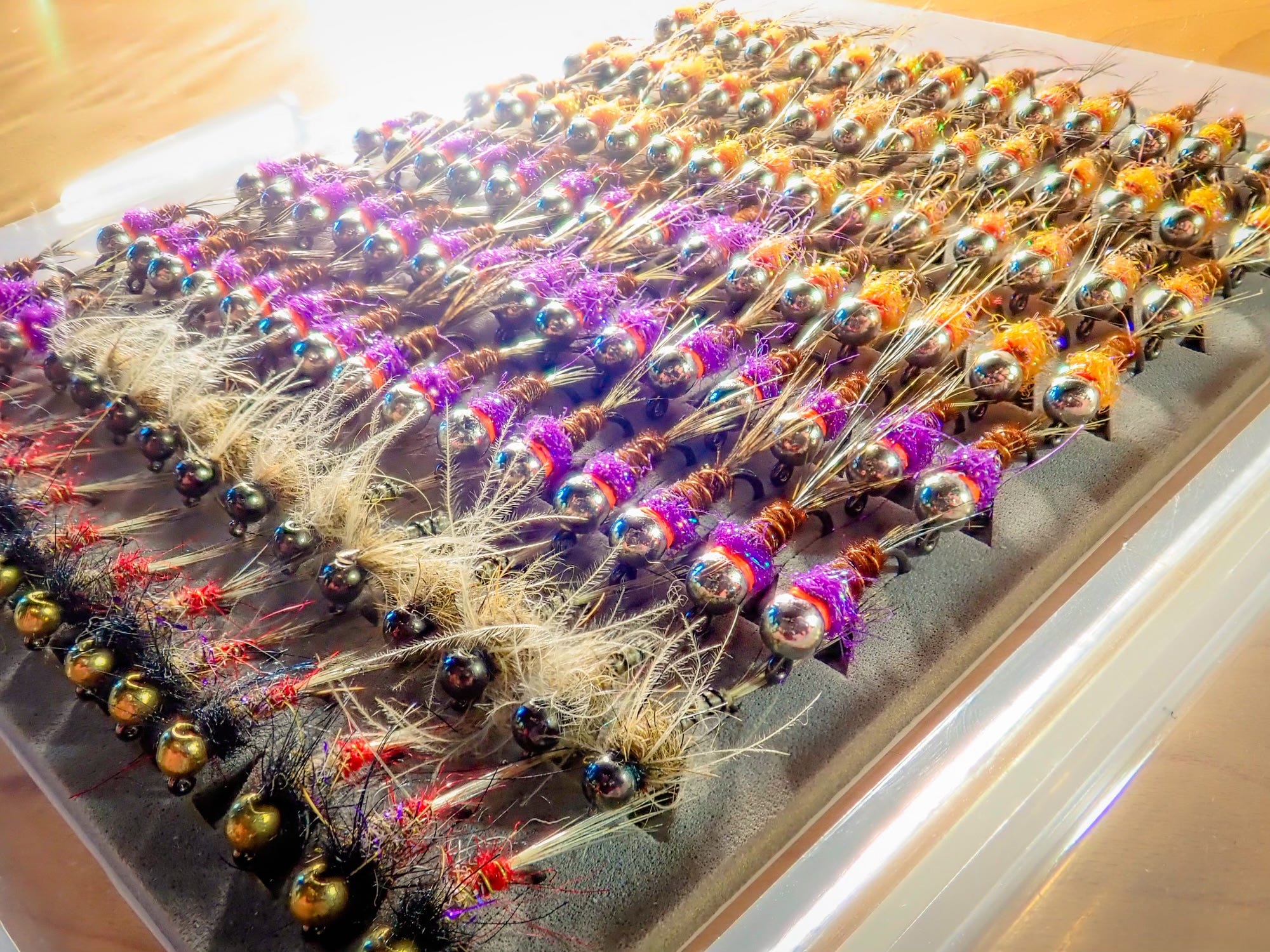
Tie-A-Thon wraps up with event
The annual fishing fly Tie-A-Thon — an incredible, locally based effort where anglers across the U.S. and distant countries create thousands of ties for charity — ties up on Saturday, April 11.
Anglers still have a chance to join the grand finale April 11 at the Elkhart Conservation Club in Elkhart, Indiana, for lunch, a raffle and a final fly-tying session. But they must make reservations by the end of Wednesday, April 7 by emailing Tieathon@gmail.com.
The event generated and donated 54,300 flies last year. So far, this season’s volunteers have committed 39,300 flies, with 32,500 received so far, organizers report. A total of $1 million worth of flies has been donated over the past two decades. It all goes to groups that use fishing to help young people to grow and adults to heal. You can learn a lot more here in my Dec. 16 blog about the Tie-A-Thon. Among others, I spoke with Tim Scott of South Bend, who is conservation chairman for the St. Joseph River Valley Fly Fishers.
I explained how both tying flies and fishing tap into the healing power of mindfulness.
Michigan fishing regulations for 2026
The spring fishing license season began in Michigan on April 1. You can check out Michigan’s 2026 fishing regulations at this website. See what’s new this season.
Among the changes, the state has a new limit of five burbot that you can keep per day. More on that on page 12 of the regulations.
Also, there’s a new definition in bead fishing for salmon and trout. Look it up on page 8 of the regulations.
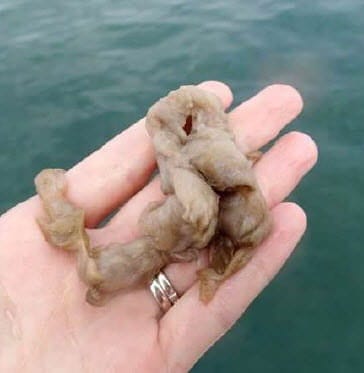
What to do about rock snot in Michigan?
It’s time to learn more about “rock snot,” or didymo, an invasive and microscopic algae that forms on rocks and other hard surfaces underwater.
The Michigan Invasive Species Program will host a free webinar about efforts to track rock snot in Michigan rivers at 9 a.m. Wednesday, April 15. The algae looks and feels like white or tan/brown wet wool but actually isn’t slimy, according to Michigan’s website on invasives.
Nuisance blooms have been documented in Michigan in the Boardman, Upper Manistee and St. Marys rivers. The state encourages boaters to “Clean, Drain, Dry” their boats after each float.
In the webinar, Lake Superior State University’s Ashley Moerke and Trout Unlimited’s Bryan Burroughs will talk about survey data from across the state the relationship between water chemistry and didymo blooms. They’ll also talk about Trout Unlimited’s community science program and how the public can help with monitoring efforts.
Sign up for the Zoom webinar in this link.
Contact writer Joseph Dits at josephdits@gmail.com.
Feel like you’re getting more than you’re paying for from Joe? Your one-time tip would be beyond your subscription. Any amount is deeply appreciated. You truly rock!